
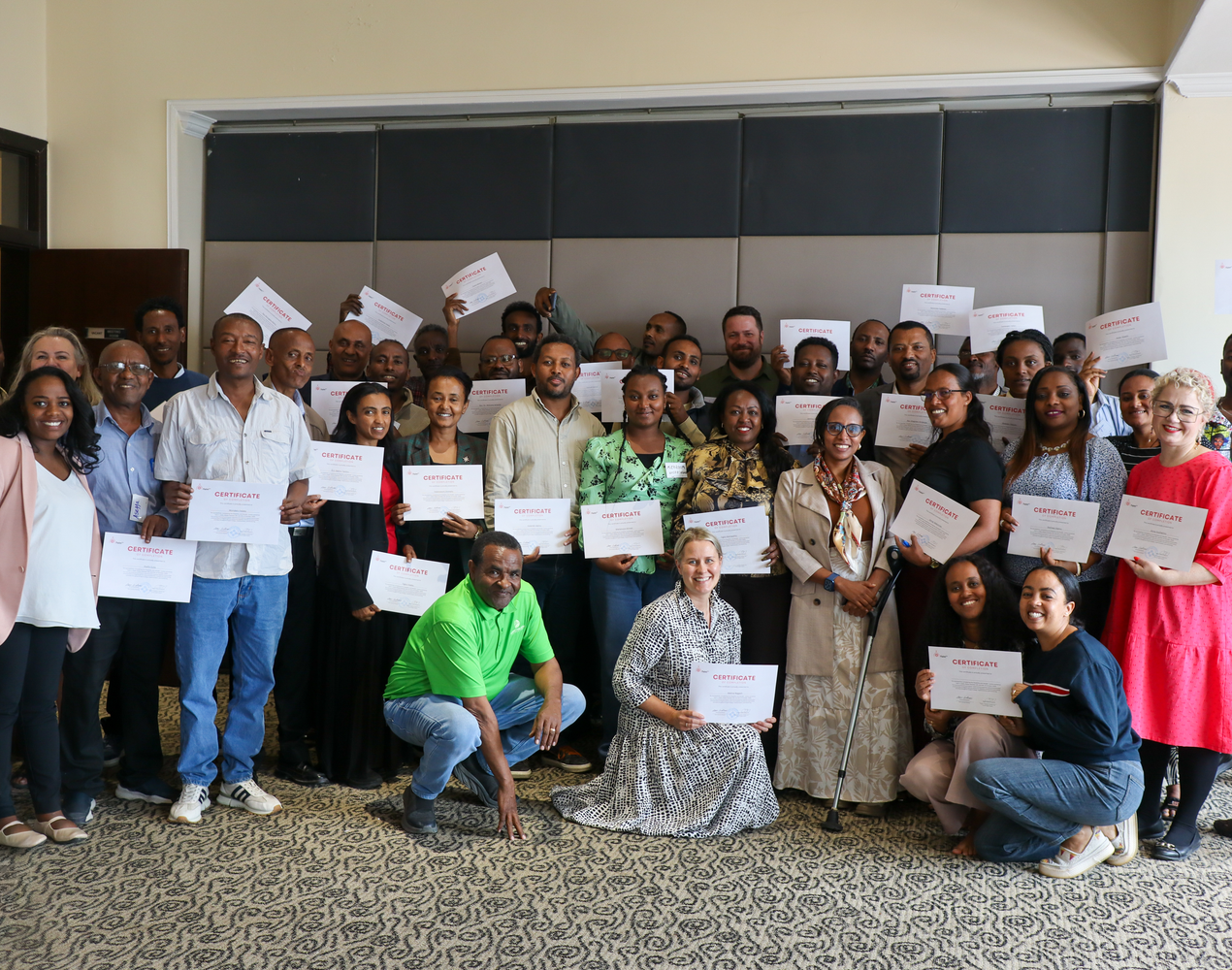
Partnership is a core part of Felm’s identity, values, and mission. Felm’s partnership model is grounded in locally led approaches, local ownership, equal partnership, and shared responsibility. Felm’s programme is implemented through partnerships with local actors and guided by long-term engagement, local ownership, and holistic change. A key strength of the model is Felm’s ability to connect institutional donor funding with locally led action, enabling local organisations to access resources while strengthening systems, accountability, and long-term sustainability.
Felm and its local implementing partners work together in planning, implementation, monitoring, evaluation, and learning. Felm’s project guidance emphasises participatory planning, stakeholder engagement, capacity assessment, and joint accountability throughout the project cycle.
Felm’s role is not to replace local actors, but to help create the conditions in which they can lead, influence, and sustain change in their own contexts.
Felm continues to clarify how local ownership, locally led action and decision-making are understood, supported and followed up across its programmes and partnerships.
Civil society, churches and networks
Felm’s local implementing partners include civil society organisations, institutes, local churches, faith-based organisations and networks.
This range of partnerships brings together community-rooted relationships, thematic expertise, advocacy, humanitarian standards, and international cooperation.
Felm is also part of wider international and ecumenical networks, including ACT Alliance. It works with other organisations where cooperation contributes to the work’s objectives.
Partnership governance and mutual learning
Felm’s partnership model includes structures for dialogue, consultation, and shared strategic reflection. The Felm International Advisory Board brings representatives of international partners into discussions about strategy, programme work, policies and partnerships.
Partner consultations have also informed Felm’s strategy and future cooperation. The consultation process conducted in 2024 contributed to the strategy revision and identified shared priorities for future work.
Felm’s project management guidance emphasises peer learning, joint planning, and thematic cooperation between partners during the 2026–2029 period.
Collaboration models
Felm works through direct partnerships, multi-partner delivery, and consortium collaboration.
Felm also seeks to assist local implementing partners with resource mobilisation, funding applications and consortium leadership where this contributes to local ownership and long-term sustainability.
Felm has extensive experience in managing donor-funded projects and programmes through local partnerships, combining strong fiduciary oversight and compliance systems with a commitment to locally led development and partner capacity strengthening.
Across these models, the emphasis remains on established local relationships, clear responsibilities, mutual accountability, and a shared commitment to results.